Sharing some of my most recent work for y’all.

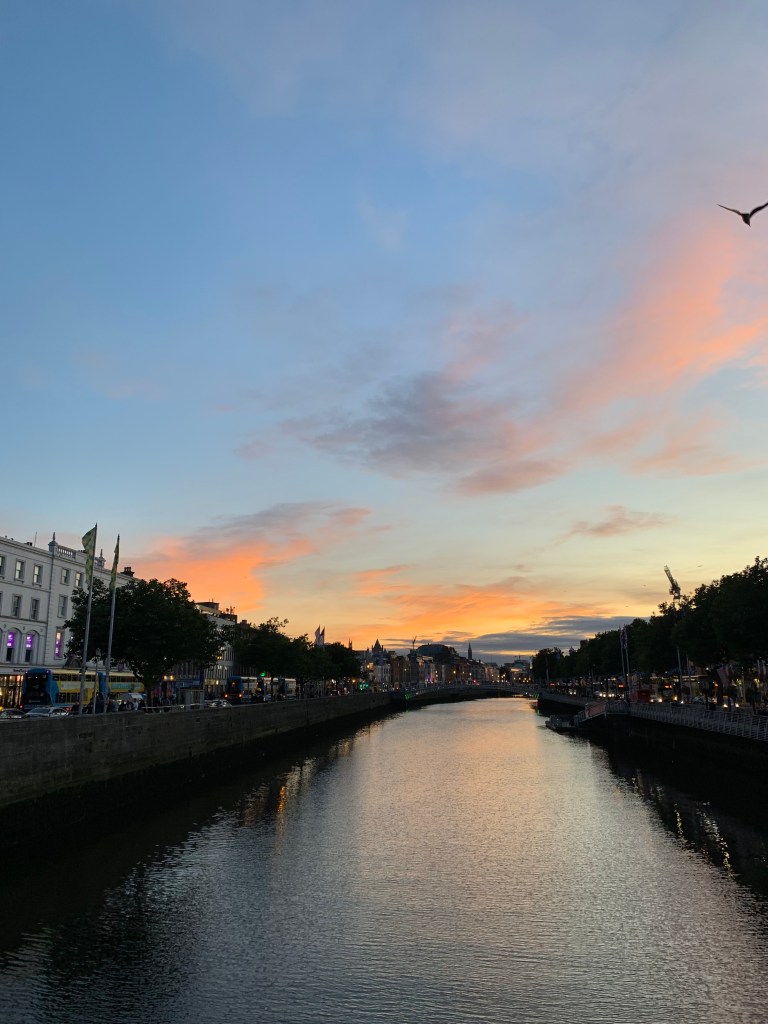
Capturing moments
Sharing some of my most recent work for y’all.
The perfect jeans are a staple of anyone’s wardrobe and should be both comfortable and flattering. With your unique body shape and sense of style, it can be hard to find a pair that’s just right. Luckily, there’s a flattering cut for every figure whether you’re male or female, and also a right way to approach shopping for your perfect jeans.
1. Wear tapered ankle jeans if you’ve got an apple shape. If your upper body is curvier than your lower body, opt for tapered ankle or skinny jeans. These styles accentuate thin legs.
2. Go with skinny flares if you’ve got an hourglass figure. If your bust and hips are similar in diameter and you’ve got a more narrow waist, skinny flare jeans will hug your curves, accentuate your shape, and add a sense of balance.[2]
3. Get stretch denim with long inseams if you’re pear shaped. If you’re more curvy on the bottom than the top, get stretchy jeans with long inseams to give yourself a sleek silhouette and to seemingly elongate your legs
I hope this post will be helpful in finding a perfect jeans that fits any body type.

Piercings and tattoos are body decorations that go back to ancient times. Body piercing involves making a hole in the skin so that you can insert jewelry. This is often in the earlobe, but can be in other parts of the body. Tattoos are designs on the skin made with needles and colored ink. A permanent tattoo is meant to last forever. Permanent makeup is a type of tattoo.
The health risks of piercings and tattoos include
To reduce the risks, make sure that the facility is clean, safe and has a good reputation. Proper sterilization of the equipment is important. Be sure to follow the instructions on caring for your skin.
Holes from piercing usually close up if you no longer wear the jewelry. It is possible to remove tattoos, but it’s painful and can cause scarring.
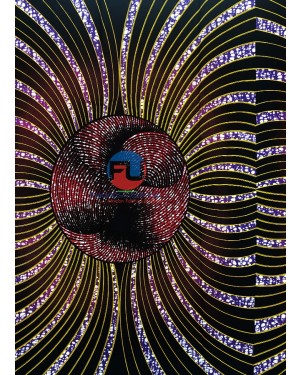
African fabrics and prints are worn with pleasure and it is every woman’s pride to be wearing an African print at an occasion. African fabrics have bright colours, idiosyncratic designs and patterns which give a sense of a rich cultural meaning.
African cloths were worn for special occasions such as family reunions, weddings, and events. Uses in various category , bags, shoes, decoration, dresses, shirt, quilt, and etc. African fabric forms part of a cultural identity and an emblem of cultural heritage.
Collections of African fabrics like african wax, hitarget print, guaranteed wax, african kente fabric, african hollandais, metallic gold, black and white fabric, black and red print, red and black fabric, black and gold fabric, angelina, bazin and meba wo abrokyere print fabrics signifies culture.

Dating and being in a relationship can be a costly venture.
But do not fear, because I have found you the ideal date spots around Dublin that won’t cost you an arm and a leg.
The trendy bar on Wexford Street recently launched their Bottomless Pizza Sundays and is the ultimate place to hit for a hangover cure. If you and your beau fancy a cheap relaxing date on a Sunday, The Jar is the place to be. For just €10 per person, you can enjoy a pizza and a glass of house wine or beer. If you’re really hungry you can devour a bottomless pizza and a glass of house wine or beer for just €15 per person. And best of all, their pizzas are amazing. What more could you want?
If you’re looking for a good laugh – this is the place to be. The comedy club in The International Bar has several different shows on throughout the week with alternating amazing acts. They often have surprise guests – Foil Arms and Hogs showed up when I was there last they have two shows on a Saturday night and tickets come at a cheap price of €10 per person. It’s always a hit and guaranteed to leave you crying with laughter.
If you’re looking for a mouth-watering meal at a price that won’t break the bank, Thundercut Alley in Smithfield is a pretty hot spot. From fried chicken and flatbreads to delicious in-house cocktails you are bound to have a scrumptious time. The food almost looks too good to eat! Presentation 10/10. Always. After the meal, why not stick around for a few drinks in the quirky restaurant?
View this post on InstagramA post shared by Thundercut Alley (@thundercutalley) on

Feared, derided, misunderstood and still resolutely un-hugged, the utilitarian, hugely popular sportswear garment, the hoodie, has staged a comeback against a backdrop of pyromania and rioting. Worn by millions every day: a generation’s default wardrobe choice was transformed into an instant criminal cloak for London’s looting youth. It may be more newsworthy now, but the hoodie and the folk devil it represents have been with us for a long time.
In 2007 I reported from the riots that set the Parisian banlieue suburbs alight, and interviewed teenagers who had been involved with or close to the events. Most of them wore hoodies, along with the other staples of the 21st-century, hip-hop redux wardrobe – tracksuit bottoms or voluminous jeans, expensive trainers, baseball caps, black Thinsulate gloves and the occasional bandana.
year or so later, I met youths involved in gangs around the time of the London murders of teenagers Billy Cox, James Andre Smart-Fordd and Michael Dosunmu. These two groups may have been separated by the English channel, but the uniform was identical, and the hoodie was as ubiquitous as the two-piece suit in the financial centres of Paris and London.
2020 is a new year, but we may be going back in time when it comes to makeup trends.
The 2020 version is all about bringing out your best features—no ultra thin eyebrows this time around—with more understated, streamlined, and modern beauty looks. Ahead, I,ll be discussing five 2020-meets-1990 beauty ideas to try in the new year.
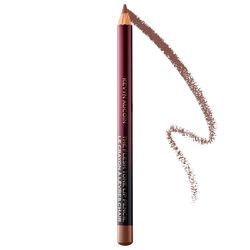
1. Brown lip color is back.
The ’90s had a lot of dark liner, and sometimes solely liner, looks but the 2020 version is all about natural and neutral. “Instead of flat browns that were so popular, it will be a hint of brown, earthy, but with a warmer undertone.
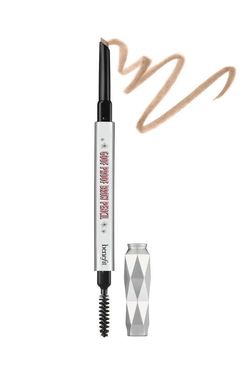
We’ve seen a lot of overdrawn “Instagram brows” in 2019, 2018 (and ’17 and ’16) but it’s time clean those up a bit. I say don’t pluck to oblivion like we all did in the ’90s, but instead clean up and shape in a natural arch (instead of a crazy arch like the lighting bolt brow).
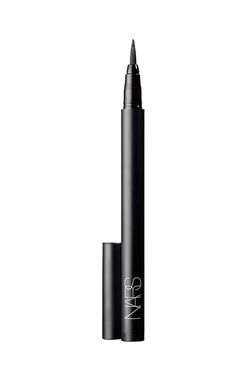
If you’re a little rusty in the eyeliner department, it’s time to brush up on your skills. It can be a soft smudgy pencil close to the lash line, or a liquid liner that flicks out at the end.
Skip the contour and frame the face. After the makeup is done, take a large fluffy brush and frame the face with bronzer along the temples, under the cheekbones and jawline.
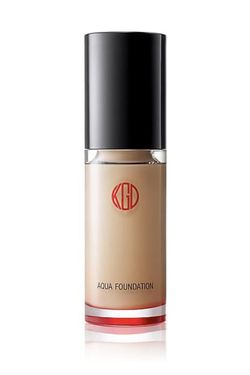
To achieve the ultimate modern, matte ’90s look, you’ll need a high quality foundation. my picks are Armani’s Luminous Silk or Koh Gen Do’s formulas.
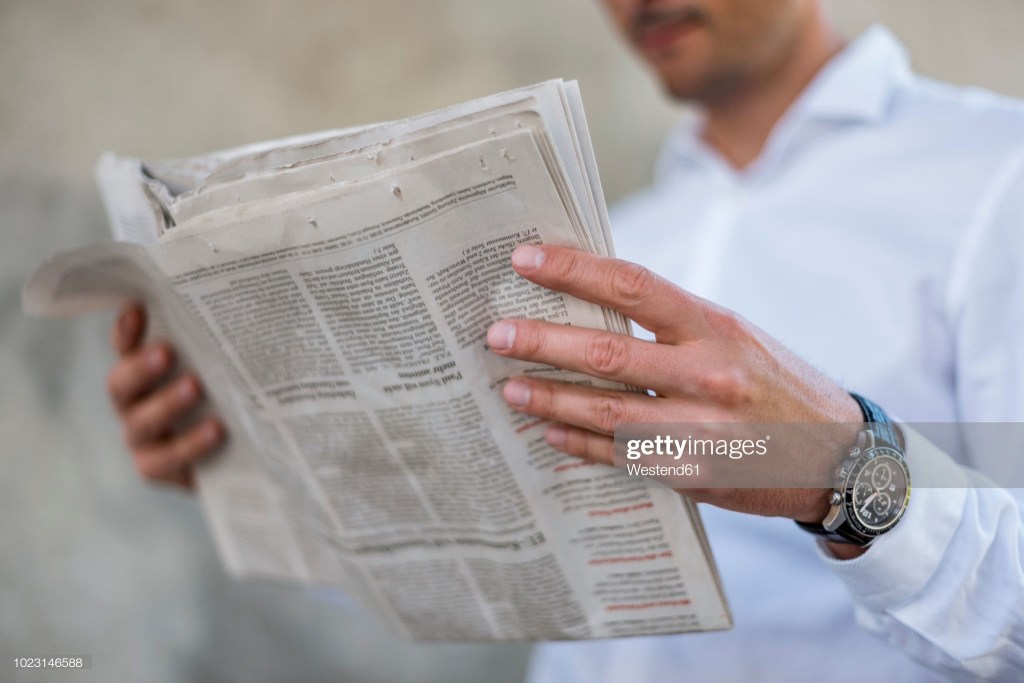
“We believe journalists have a larger role to play than they may have recognized in delivering facts and well researched news articles which doesn’t alter the concept of democracy.”
The mass communications media are the connective link that extends democracy as a concept. Focusing on news reporting and feature articles which is the means through which citizens and the elected representatives communicate in their effort to inform and influence. The media while specifying an expect which id news reporting and feature articles is a significant agent of political communication.
Journalists who come up with researched articles should consider it their job to build stories in a way that shows people the difference between good reporting, bad reporting and outright fakery. The first step is thinking about and asking what questions audiences may have about a story and then providing those answers explicitly. That simple step guides the journalist into a new and important mindset of putting themselves in the audience’s shoes.
When journalists talk about how they wish the public could recognize good reporting from bad reporting or even fakery, the subject often turns to whether the audience has the right skills. The discussion usually falls under the heading of “news literacy,” a body of work that typically involves a curriculum supervised by schools, heavily oriented toward teaching young people “critical thinking skills” as they consume news.
We believe journalists have a larger role to play than they may have recognized in delivering facts and well researched news articles which doesn’t alter the concept of democracy. The people who produce the news can do this by building their journalism differently. If journalists want their audiences to be able to differentiate solidly reported news content from work that is more speculative, thinly sourced, or backed by rumour or innuendo, then they must create their journalism in ways that make it easier for anyone to recognize those qualities.
In this feature article, we will discuss the effect bad reporting which doesn’t only affect scientific findings but also affect the public debates amongst citizens in a democratic society. We think this notion of creating journalism differently in a way that helps people become more discriminating as they consume more news could be called “organic” and expand the world of news literacy far beyond the classroom.
We propose a new way of creating journalism that helps audiences become more fluent and more skilled consumers of news the more they consume it. People working to improve what has been called “news literacy” have worked hard and well for years helping teach primarily younger audiences the skills of thoughtful news consumption. If we had our way, we would even propose some new language for the discussion as we broaden it to all audiences and to the role journalists can play in advancing these skills.
Journalists play essential roles in translating research on political policies for the public, government officials and even scientists. But with a proliferation of media outlets competing for readers’ attention and university press offices and academic journals seeking news headlines, accuracy often suffers.
For a researcher who focus new reporting and feature writing, we see news coverage of badly designed studies and researcher constantly. And we’re concerned that breathless reporting on false events can result in costly, ineffective and even harmful national policies. Few journalists seem able to understand flawed research design, a principal cause of untrustworthy research.
Take the coverage earlier this year of federally sponsored “accountable care organizations” (ACOs): medical groups and hospitals that aim to improve health-care quality and reduce costs by rewarding physicians for staying under their assigned budget, charging them for exceeding it and paying them to meet performance goals, like ordering certain lab tests. Promising as they might sound, the best available evidence shows these systems don’t work. Despite this, the U.S. spends billions on such programs, and new, bipartisan national legislation (“MACRA”) will expand them even further.
Distorted journalistic reports can generate both false hopes and unwarranted fears. For instance, when a finding is reported in a sensational way, the results may create a national media feeding frenzy.
The fast-free progression of data is a revile marked gift. Media-instigated waste ups and shock are practically predetermined as due determination and limitation tumble to the wayside in quest for being the first to break a story. In any case, as we know it where features can go as far and quick as innovation permits, even a basic underestimation of the open’s affectability to an issue can start a burning debate.
Glaring Example of News Reporting Gone Wrong. A Baseless Terrorism Scare On 9/11 –
On September 11, 2009, the US Coast Guard held an unannounced preparing exercise on the Potomac River close to the Pentagon. On some other day, this common routine may have been met with quieted lack of concern. Be that as it may, a few variables met up to make a montage of froze residents, upset sightseeing plans, and a frantic race by the FBI to the site of the preparation. Furthermore, it has all the earmarks of being the deficiency of misjudged sound to word imitation and an inability to communicate. A bit of setting is all together. The Coast Guard conveys over a radio recurrence open to news outlets. So, when it organized a contention with a non-existent security danger, the odds of transmissions being gotten by a columnist were at that point noteworthy. This artificial experience was likewise happening on the eighth commemoration of America’s most scandalous assaults, so the chances that an individual from the media would observe the trade got massive. Far more detestable, the Coast Guard seemed to have abandoned its run of the mill convention of declaring when its transmissions are a piece of a preparation exercise. With the circumstance prepared for eruption, an individual from the CNN news group purportedly confounded the articulation of “blast, blast, blast” as a sign that shots had been discharged. Furthermore, subsequent to neglecting to get an answer from the Coast Guard in the wake of inquisitive about the message, CNN revealed potential discharges close to the Pentagon, and other news sources acted accordingly. The news broke as President Barack Obama was perusing the names of the thousands lost in the 2001 assaults, and for a concise period, the nation was diving into a panic. The misconception was before long revealed however not before flights had been postponed and the FBI were dispatched to discard a ghost fear monger. For its exuberance, CNN took colossal fire from the White House. So, while some express it’s smarter to be sheltered than sorry, CNN took in the significant exercise that one can now and then feel frustrated about being excessively protected.
What used to be a generally light-hearted column about the most outrageous corrections issued by media organizations over the past years.
One year ago, Donald Trump started calling media reports he disagreed with “fake news” — regardless of whether they were inaccurate or not. He hasn’t stopped. The acrimony reached a peak when Washington Post reporter Dave Weigel tweeted an inaccurate photo, apologized and was publicly blasted by the president on Twitter, who then asked for his firing.
Two things can be true at the same time. Journalists screw up most of the times. And journalists have a responsibility to do better. At the same time, quality journalism is geared towards reaching the truth and based on facts. We cross-check sources. We fact-check claims. We correct our mistakes, as the vast collection of examples below shows. Few other professions are as committed to corrections as ours is.
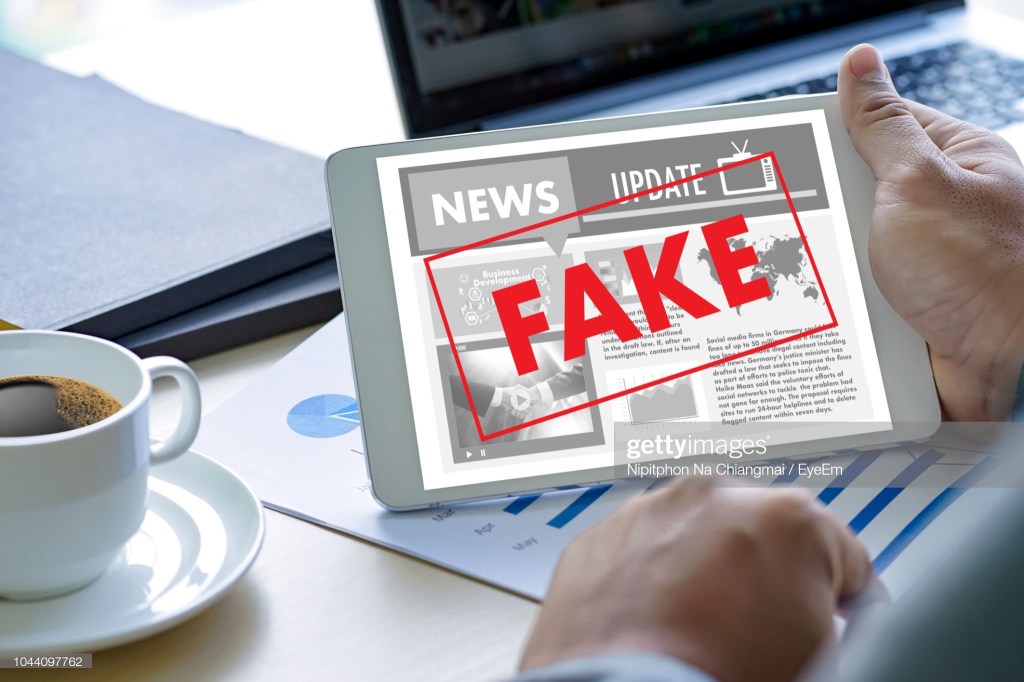
First, disinformation and fake news are widespread, and those seeking to manipulate the public sphere can capitalise on declining levels of trust in institutions and experts. There are different motivations for the types of propaganda and ‘fake news’ we are seeing. Sometimes, it is a deliberate attempt to spread false information or sow doubt in people’s minds as in Russian disinformatzya tactics. At other times, the motivation is purely financial, as in the case of Macedonian teenagers who were targeting Trump supporters in the 2016 US presidential election for the advertising revenue they received. And at this time when established sources and institutions have lost credibility and people struggle to accurately identify when news is false, these factors contribute to potentially fertile ground for those wishing to manipulate opinion in a situation.
Secondly, there is a tremendous concentration of power and money held by news reporting and article feature platforms. Currently, major news reporting and article feature platforms are not regulated as media companies (despite in many instances curating content) or as public utilities. The intermediary liability protections media companies have enjoyed in much of the world in recent years facilitated a flourishing of free expression. Opportunities for free speech crept into relatively closed societies via the internet. But there is now an extraordinary concentration of market power in a very few US-based technology companies, raising serious questions in a world where artificial intelligence and technology have the potential to transform whole sectors of the economy in the way we have seen in recent years with news. We operate with a radically altered media landscape where tech platforms are now receiving the bulk of advertising revenues which used to go to traditional news publishers including local newspapers. The growth of what Tim Wu from Columbia Law School has described as the attention economy: ‘the resale of human attention – that is, gathering eyeballs or access to the public’s mind and selling it to advertisers.’ raises profound questions about the news people access and whether citizens understand this new landscape where misinformation and disinformation proliferate alongside traditional journalism.
There are different motivations for spreading the kinds of propaganda and fake news we have been hearing about in the media over the past year. Who exactly is spreading propaganda, and can you describe some of the different kinds of tools and techniques that are used to manipulate public opinion?
There are many different actors involved and we’re learning much more about the different tactics that are being used to manipulate the news reporting and article feature platforms public sphere, particularly around elections. There are numerous examples of hacking, leaking and the insertion of fake information into troves of dumped documents online. The US alt-right, along with bots, played a role in amplifying the #Macronleaks that took place just 48 hours before the second round of the French presidential elections. After Macron’s emails were hacked, fake documents were inserted into them suggesting Macron had connections to offshore financial accounts. What is interesting to see here, is not only the coordination involved in both the leaking of fake and genuine documents and then the spreading of this information on Twitter, but also the role of foreign actors, including the US alt-right in a French election. This suggests that efforts at manipulation across geographic boundaries are occurring now not only in state-sponsored efforts, but also through motivated individuals and groups wishing to promote a world view.
The US presidential election in 2016 saw the behavioural targeting of voters and using this data to suppress voter turnout. The US presidential election in 2016 provided several examples of this tactic. For instance, in the days before the election, messages circulated on social media that Hillary Clinton had died. And in some key battlegrounds, messages were targeted at Democrat voters claiming that the date of the election had changed. Politics and political campaigns increasingly look like classic consumer marketing, with political parties taking advantage of sophisticated data capture, segmentation and micro-targeting techniques. At the same time, there is currently little serious public discourse on the potentially serious ethical and philosophical implications for democracy and open societies.
BY- OMOFADEKEMI ADEPITAN
FOR – JOURNAL.IE
As a journalism Student, I was opportuned to be a newscaster on the Griffith FM News. I attached an audio of the news session to my blog..
Rate my Newscasting Skills.
For the love of photography and capturing moments, today’s content will be focused on photography quotes.
1- “It is more important to click with people than to click the shutter.” – Alfred Eisenstaedt
2- “You don’t take a photograph, you make it.” – Ansel Adams
3- “There are always two people in every picture: the photographer and the viewer.” – Ansel Adams
4- “Don’t shoot what it looks like. Shoot what it feels like.” – David Alan Harvey
5- “The best thing about a picture is that it never changes, even when the people in it do.” – Andy Warhol

 Fade's phonegraphy